
Coriander
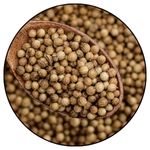
Common Name: Coriander
Botanical Name
Coriandrum sativum L.
Family
Apiaceae
Commercial Part
- Leaves (fresh coriander or cilantro)
- Seeds (dried fruit)
Description
Coriander is a widely used spice crop known for its characteristic aroma and flavor.
- It is a small, bushy annual herb with thin stems and grows to a height of 25–50 cm.
- Leaves are alternate, compound, and highly aromatic, used fresh in culinary preparations.
- Inflorescence is a compound umbel comprising 5 smaller umbels.
- Fruits (commonly referred to as seeds) are globular, 3–4 mm in diameter, and break into two locules, each with one seed when pressed.
- Seeds are pale white to light brown and have a delicate fragrance.
There are two main morphological types:
- Erect and tall type with a strong central shoot
- Bushy type with weaker main shoot and longer spreading branches
Climatic Requirements for Cultivation
- Climate: Tropical to subtropical
- Season: Primarily cultivated as a rabi (winter) season crop
- Temperature: Best grown in areas free from severe frost, especially during flowering (February)
- Rainfall: Moderate, well-distributed
- Soil: Well-drained loamy or sandy loam soils with good organic matter
- Altitude: Grows well up to 1,000 meters MSL
Origin and Distribution
- Origin: Native to the Mediterranean region
- Global Production: India, Morocco, Russia, East European countries, France, Central America, Mexico, and USA
- India is the largest producer and consumer of coriander in the world
Major Growing Areas in India
- Rajasthan – Kota, Baran, Bundi, Jhalawar
- Madhya Pradesh – Neemuch, Mandsaur
- Andhra Pradesh – Guntur, Prakasam
- Tamil Nadu – Dharmapuri, Salem
- Karnataka – Bagalkot, Belgaum
- Gujarat – Banaskantha, Mehsana
Popular Varieties
- CO 1, CO 2 – Tamil Nadu
- CS 4, CS 6, CS 11 – Central varieties
- RCr-41, RCr-435, RCr-446 – Rajasthan
- Sadhana – Andhra Pradesh
- GCr-1, GCr-2 – Gujarat
Important Uses
Culinary:
- Leaves used as garnish and flavoring in curries, soups, and salads
- Seeds used whole or ground in curries, masalas, sausages, pickles, and seasonings
- Widely used in bakery products, meat preparations, sodas, syrups, puddings, and liquors
Medicinal:
- Used as carminative, refrigerant, diuretic, and aphrodisiac
- Effective against stomach disorders, fever, and nausea
- Coriander oil and oleoresin used in flavoring processed meats and other products
Indian Names of Coriander
- Hindi: Dhania
- Bengali: Dhana, Dhania
- Gujarati: Kothmiri, Libdhaba
- Kannada: Kothambri, Kothamiri bija
- Kashmiri: Deaniwal, Kothambalari
- Malayalam: Kothumpalari bija
- Marathi: Dhana
- Oriya: Dhania
- Punjabi: Dhania
- Sanskrit: Dhanyaka
- Tamil: Kothamalli
- Telugu: Dhaniyalu
Foreign Names of Coriander
- Spanish: Cilantro
- French: Coriandre
- German: Koriander
- Swedish: Koriander
- Arabic: Kuzhbare
- Dutch: Koriander
- Portuguese: Coentro
- Russian: Koriandr
- Japanese: Koendoro
- Chinese: Hu-sui